The Birthplace of Yoga: Discover the Ancient History of Yoga, Ayurveda & India's Most Inspiring Yoga Retreats - Episode 1
The Birthplace of Yoga: Where Ancient Wisdom Meets Modern Wellness
“For thousands of years, travellers have journeyed to India not simply to visit a destination, but to embark on a journey of self-discovery. Long before yoga studios became part of city skylines and wellness retreats flourished across the globe, India’s sages were exploring the profound connection between body, mind, and spirit. Their teachings gave rise to yoga—a timeless practice that continues to inspire millions of people around the world today.”

Imagine standing on the banks of the sacred River Ganges as the first rays of sunlight illuminate the foothills of the Himalayas. The air is cool and fragrant with incense, temple bells ring softly in the distance, and the gentle chanting of ancient Sanskrit mantras echoes across the water. Around you, practitioners from every corner of the globe gather in peaceful silence, welcoming the dawn with meditation and yoga.
This is India—the birthplace of yoga.
More than a destination, India is a living tapestry of spirituality, philosophy, and wellness. It is where yoga first emerged over 5,000 years ago, evolving through centuries of wisdom passed from teacher to student. Today, that legacy lives on in sacred temples, peaceful ashrams, luxury wellness retreats, and vibrant communities dedicated to preserving one of humanity’s oldest holistic traditions.
Although yoga has become a global phenomenon, attracting an estimated 300 million practitioners worldwide, its true essence remains deeply rooted in India’s rich cultural and spiritual heritage. Here, yoga is far more than a series of physical postures. It is a way of life—a philosophy that encourages balance, mindfulness, compassion, and inner transformation.
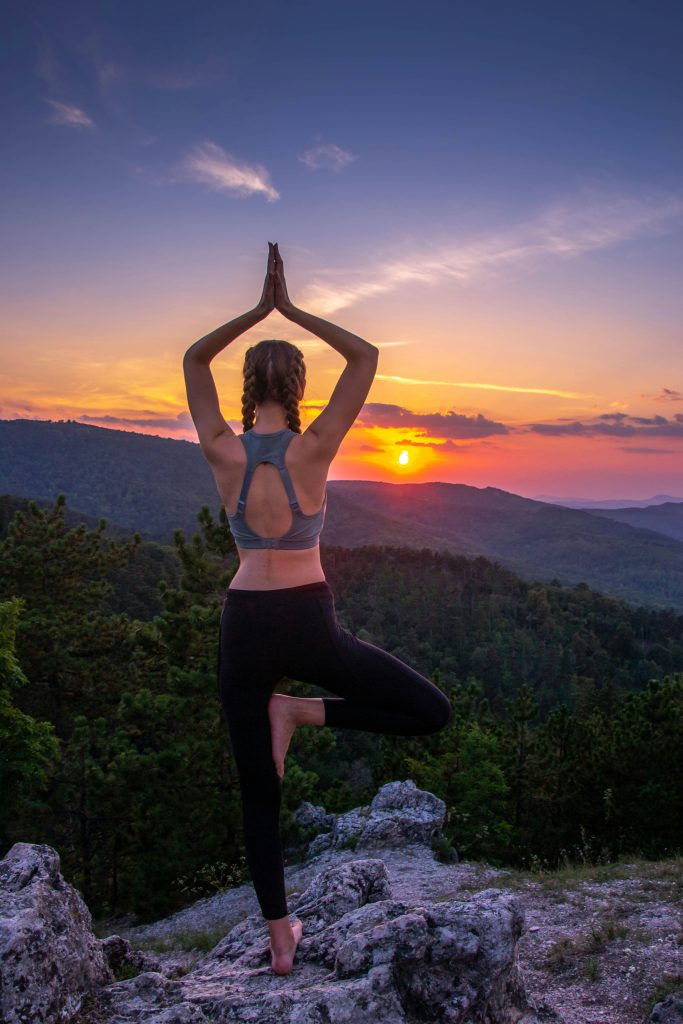
For many travellers, a journey to India is about more than sightseeing. It is an opportunity to slow down, disconnect from the demands of everyday life, and reconnect with something deeper. Whether practicing sunrise yoga beside the Ganges in Rishikesh, meditating in the tranquil foothills of the Himalayas, or experiencing traditional Ayurvedic healing in Kerala, visitors often discover that the greatest journey is the one within.
Yoga’s enduring appeal lies in its remarkable ability to meet people wherever they are. Some arrive seeking improved health and flexibility. Others come searching for relief from stress, emotional balance, or a renewed sense of purpose. Many simply wish to experience the authentic roots of a practice that has touched countless lives across cultures and generations.
India offers all of this and more. From centuries-old monasteries nestled in the mountains to world-renowned wellness resorts overlooking tropical beaches, the country invites every traveller to explore yoga in its most authentic setting. Along the way, visitors encounter not only expert teachers and ancient traditions but also the warmth of Indian hospitality, vibrant festivals, nourishing cuisine, and breathtaking landscapes that enrich the entire experience.
As yoga continues to unite people across continents, its heart remains firmly anchored in India—a country where ancient wisdom continues to shape modern wellbeing.
In this guide, we invite you to discover the fascinating history of yoga, explore the timeless principles that have guided practitioners for millennia, learn how Ayurveda complements the yogic way of life, and journey through ten of India’s most inspiring yoga retreats and ashrams. Whether you are an experienced yogi, a curious beginner, or a traveller searching for a meaningful wellness escape, this is your invitation to experience yoga where it all began.
The Origins of Yoga: A Journey Through Ancient India
“To understand yoga is to understand one of humanity’s oldest continuous quests for harmony—a journey that began thousands of years before the modern world, in a land shaped by great rivers, sacred mountains, and timeless wisdom.”
Long before yoga studios appeared in cities around the world, before wellness retreats welcomed travellers seeking balance, and before the word yoga became part of everyday conversation, the seeds of this ancient practice were quietly taking root in the Indian subcontinent.
To discover yoga’s true origins, we must travel back more than 5,000 years, to a time when some of the world’s earliest urban civilizations flourished along the fertile plains of the mighty Indus River. Here, amid carefully planned cities, bustling marketplaces, and sophisticated communities, a remarkable story began to unfold—one that would eventually shape the spiritual lives of millions across the globe.
This is not simply the history of yoga.
It is the story of humanity’s enduring search for inner peace, self-understanding, and a deeper connection with the world.
Where the Story Begins: The Indus Valley Civilization (c. 3300–1300 BCE)
Imagine standing on the dusty streets of an ancient city more than five millennia ago.
Around you rise carefully constructed homes built from baked bricks, their straight streets laid out in an orderly grid. Skilled craftsmen shape pottery, merchants prepare goods for trade, and children play in courtyards shaded from the afternoon sun. Nearby, the broad waters of the Indus River nourish fertile farmland, sustaining one of the world’s earliest and most advanced urban civilizations.
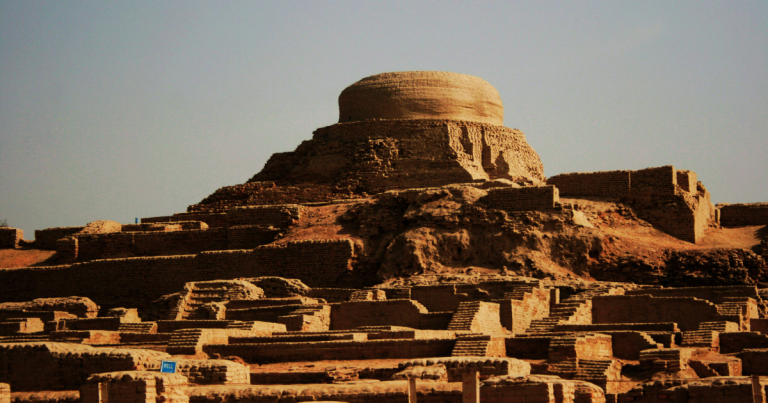
This was the Indus Valley Civilization, also known as the Harappan Civilization. Stretching across parts of present-day northwestern India and Pakistan, it flourished thousands of years before many of history’s most famous empires. Cities such as Harappa and Mohenjo-daro displayed remarkable achievements in urban planning, drainage systems, architecture, and long-distance trade.
While no written records have yet been deciphered, archaeological discoveries reveal a society that valued order, craftsmanship, and perhaps even spiritual reflection. Among these discoveries is one of the most intriguing artefacts in the history of yoga.
The Mystery of the Pashupati Seal
In the early twentieth century, archaeologists uncovered a small steatite seal at Mohenjo-daro that has fascinated historians ever since.
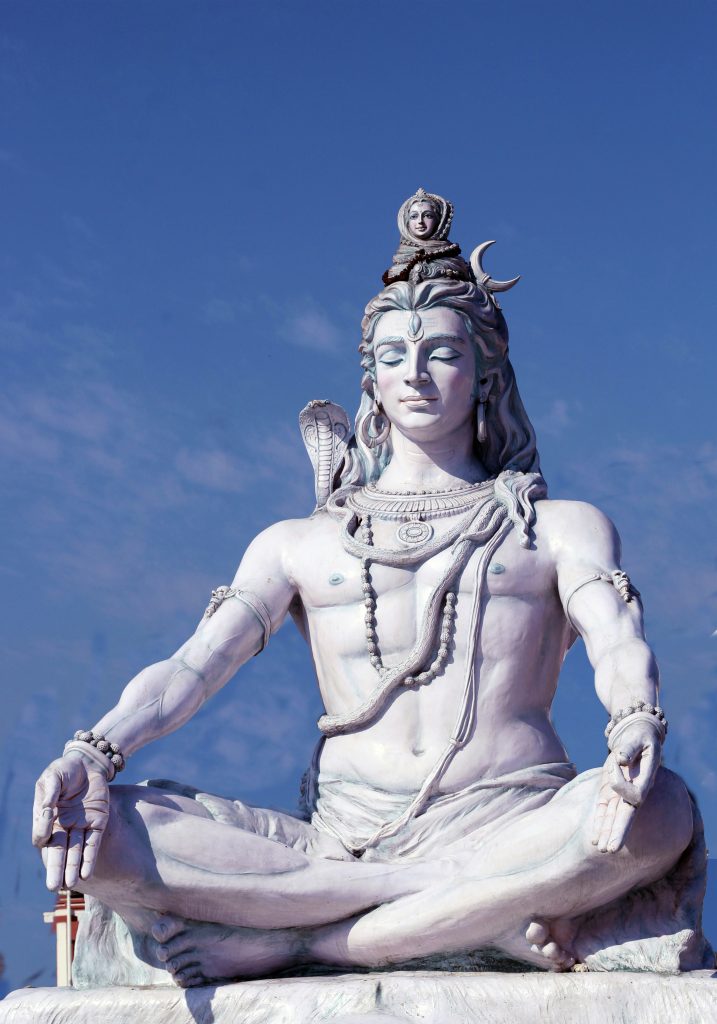
Known as the Pashupati Seal, it depicts a horned figure seated in what appears to be a cross-legged posture, surrounded by animals including elephants, tigers, rhinoceroses, and buffalo. Some scholars have suggested that this figure may represent an early form of Shiva as Pashupati, meaning “Lord of Animals,” and that the seated posture resembles a meditative yogic position.
It is an exciting possibility—but it is also one that deserves careful interpretation.
Many historians caution that we cannot say with certainty that the seal depicts yoga as we understand it today. The script of the Indus Valley Civilization remains undeciphered, and no accompanying texts explain the image’s meaning. While the seal may hint at spiritual or meditative practices, it does not provide definitive proof that organized yoga existed during this period.
Rather than diminishing its significance, this uncertainty makes the discovery even more fascinating. It reminds us that history is often a puzzle, with each archaeological find offering another piece rather than the complete picture.
For travellers visiting museums or reading about ancient India, the Pashupati Seal remains a powerful symbol of yoga’s deep and mysterious roots.

A Land That Encouraged Reflection
Even if yoga had not yet taken the form we know today, the landscape itself helped shape the spiritual traditions that would later flourish.
India’s geography offered extraordinary diversity. Snow-capped mountains towered in the north, dense forests covered vast regions, mighty rivers sustained thriving communities, and fertile plains nurtured prosperous settlements. These environments provided places not only for survival but also for contemplation.
Across generations, people looked to nature for meaning. The changing seasons, the movement of rivers, the rising and setting of the sun, and the rhythms of life inspired questions that remain deeply familiar today:
Who are we?
Why do we suffer?
What is the purpose of life?
Can lasting peace be found within ourselves?
These timeless questions would eventually become central to the philosophy of yoga.
The Birth of an Idea
One of the most remarkable aspects of yoga’s history is that it did not begin as a system of physical exercise.
There were no yoga studios, fitness classes, or colorful exercise mats.
Instead, yoga emerged gradually through centuries of observation, meditation, disciplined living, and philosophical inquiry. Long before written texts described yogic practices, generations of teachers and students passed their wisdom from one to another through spoken tradition.
It was a slow and natural evolution rather than a single moment of invention.
Like the great rivers that shaped ancient India, the tradition of yoga gathered strength over time, flowing through different cultures, beliefs, and generations before becoming the rich and diverse practice we know today.
A Journey Continues…
The story of yoga does not end with the Indus Valley Civilization.
In fact, it is only just beginning.
As centuries passed, India’s spiritual traditions evolved through sacred hymns, philosophical debates, and profound discoveries about the nature of the human mind. These teachings would eventually be recorded in some of the oldest religious texts in the world, laying the foundations for yoga as we know it today.
In the next part of our journey, we leave the ancient cities behind and step into the Vedic Age, where sacred chants echoed through forests, wise sages contemplated the mysteries of existence, and the first written threads of yoga began to emerge.
The Wisdom of the Forest Sages
How Ancient India Shaped the Philosophy of Yoga
“The quieter the world became around them, the more clearly they began to hear the questions within.”
Arrival — The Forest
The path grows quieter with every step.
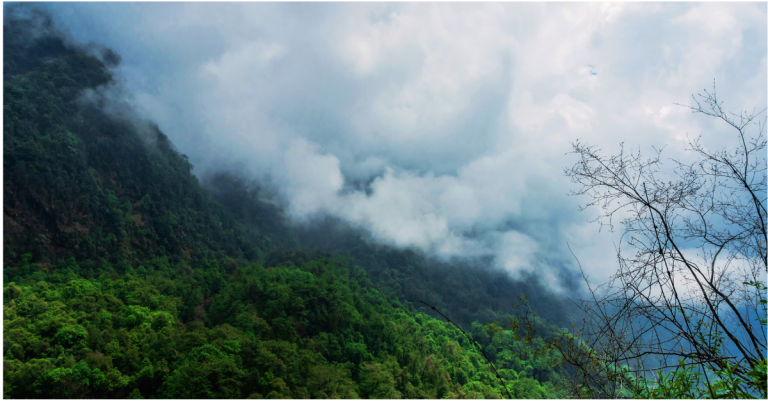
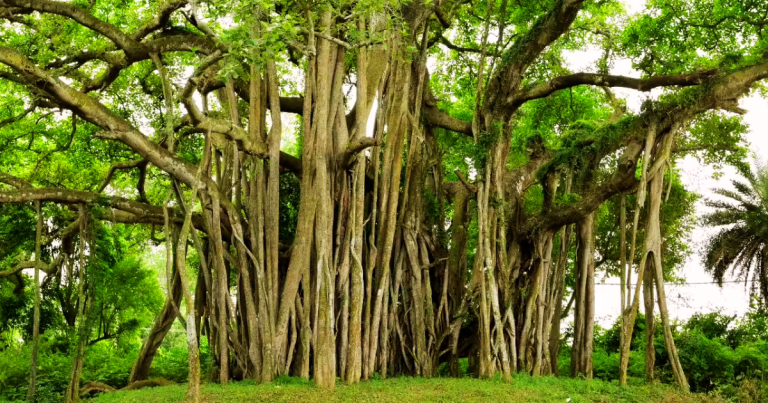
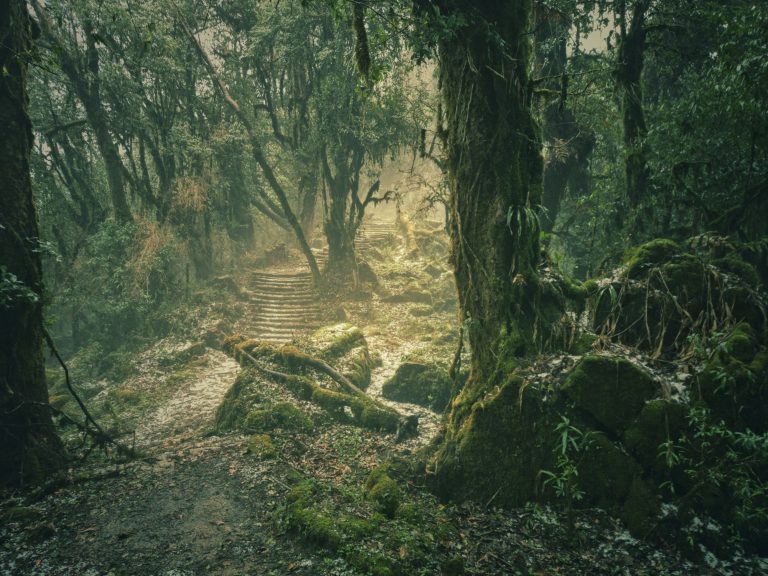
The bustling settlements and thriving cities of the Indus Valley are now far behind. In their place stand ancient forests stretching towards distant mountains, where towering banyan trees cast cool shadows across winding footpaths. The morning air carries the scent of damp earth after rain, birdsong echoes through the canopy, and narrow streams weave silently between moss-covered rocks.
Hidden within these forests are simple hermitages made from wood, clay, and thatched roofs. There are no grand temples, no palaces, and no treasures of gold.
Instead, there is something far more valuable.
Wisdom.
This is where some of India’s greatest thinkers chose to live—not separated from the world, but close enough to nature to observe its rhythms and, through them, better understand themselves.
As travellers on this journey through India’s past, we are no longer exploring archaeological ruins.
We are entering a place where ideas were born.
The Rishis: Keepers of Ancient Wisdom
Long before universities, libraries, or written manuscripts became centres of learning, knowledge in India was preserved through an extraordinary tradition of listening, remembering, and sharing.
The teachers of this wisdom were known as Rishis—ancient sages whose lives were devoted to observation, meditation, contemplation, and the pursuit of truth. Rather than seeking wealth or power, they sought understanding. They believed that the deepest mysteries of life could not be discovered by conquering the world around them, but by exploring the world within.
Students travelled long distances, often on foot, to learn from these respected teachers. Together they lived simply, rising with the sun, collecting water from nearby rivers, preparing meals, tending to daily tasks, and spending countless hours in quiet reflection and discussion.
Lessons were not rushed.
Questions were welcomed.
Silence itself became a teacher.
For many of these sages, nature was the greatest classroom. The changing seasons, flowing rivers, whispering forests, and endless night skies were not merely landscapes to admire—they were reminders that all life was connected through an invisible harmony.
Centuries later, this understanding would become one of the foundations of yoga.
The Vedas: The First Echoes of Yogic Thought
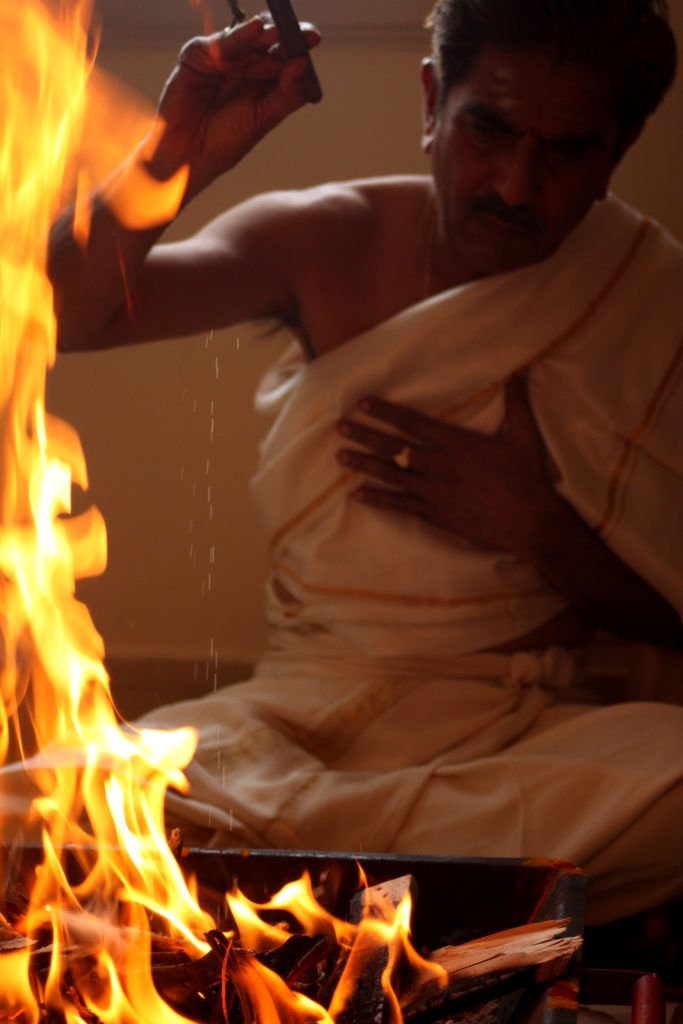
Imagine sitting beside a sacred fire as dawn slowly breaks across the Indian plains.
A teacher begins to chant.
There are no books resting on wooden tables.
No written notes.
Every word is carried in memory.
For generations, India’s sacred knowledge was passed from teacher to student through one of the world’s most remarkable oral traditions. These sacred collections of hymns, prayers, rituals, and philosophical reflections eventually became known as the Vedas—among the oldest surviving religious texts in human history.
Although the Vedas do not describe yoga as we know it today, they introduce ideas that would later become central to yogic philosophy: disciplined living, meditation, self-control, devotion, and the search for harmony between humanity and the natural world.
These teachings were like seeds.
They would continue to grow for centuries, eventually blossoming into the rich tradition we now recognize as yoga.
The Upanishads: Looking Inward
As India’s spiritual traditions evolved, a remarkable collection of writings emerged from the conversations between teachers and students living in forest hermitages.
These became known as the Upanishads.
Unlike many earlier sacred writings, the Upanishads asked deeply personal questions.
Who am I beyond my thoughts?
Why does suffering exist?
Can lasting peace be found?
What connects every living being?
These are questions that still resonate today.
Rather than offering simple answers, the Upanishads encouraged seekers to look inward through meditation, self-reflection, and mindful living. They taught that true wisdom could not be gained merely by collecting knowledge, but through direct experience and quiet understanding.
For modern readers, this is perhaps one of the most extraordinary aspects of yoga’s history.
Across thousands of years, the questions have remained remarkably similar.
Only the surroundings have changed.
A Way of Life, Not a Workout
Today, many people first encounter yoga through physical postures practiced in studios, gyms, or wellness retreats.
Yet for the ancient sages, yoga was never simply about movement.
It was a way of living.
Every conversation, every breath, every act of kindness, every moment of stillness became part of the practice. Learning to quiet the mind was considered just as important as strengthening the body.
This understanding continues to shape authentic yoga traditions throughout India today.
Visitors who spend time in traditional ashrams often discover that yoga extends far beyond the mat. Morning meditation, mindful meals, community service, chanting, silence, study, and compassion are all woven into daily life, reflecting a philosophy that has been nurtured for countless generations.
Ancient Kingdoms and Cultural Legacy
Sri Lanka’s cultural heart lies within what is often referred to as the “Cultural Triangle,” home to some of South Asia’s most significant archaeological sites.
Among them, Sigiriya stands as one of the most extraordinary. Rising nearly 200 metres above the surrounding plains, this ancient rock fortress was built in the 5th century by King Kashyapa. Its advanced urban planning—including water gardens, frescoes, and mirrored walls—demonstrates a level of sophistication far ahead of its time.
Further south, the city of Kandy remains a centre of spiritual importance. It is home to the Temple of the Tooth Relic, one of Buddhism’s most sacred sites, where daily rituals continue to draw both worshippers and visitors. These traditions are not staged for tourism—they are living practices that reflect the island’s enduring cultural identity.

A Journey Continues…
The wisdom of the forest sages transformed yoga from scattered spiritual practices into a profound philosophy of life.
Yet another chapter was still waiting to be written.
Around the second century BCE or CE (the exact date remains debated by scholars), a remarkable thinker would gather many of these teachings into a concise collection of 196 short verses.
His name was Patanjali.
His work would become one of the most influential texts in the history of yoga.
And it would change the way generations understood the path toward inner peace.
Our journey now leaves the quiet forests behind and follows the footsteps of one of yoga’s greatest teachers.
✧ Traveller’s Reflection ✧
As you walk beneath the shade of ancient trees, it becomes easier to understand why India’s forests have long been places of learning. Away from the distractions of daily life, the sages sought answers that still resonate today. Their wisdom reminds us that sometimes the greatest journeys are not measured in kilometers, but in moments of quiet reflection. untill we meet in our next episode……